Saturday, April 13, 2019

Panama: Darien part II - the lowlands

Back in the town of El Real we had a few more birds to see so we dedicated our last half-day to finding some lowland specials, especially Spot-breasted Woodpecker which I didn't want to miss. But first, we got up SUPER early because Isaac was keen to show me some night birds. We could not lure in the Great Potoo so that was a sore miss, but a nice consolation was this Tropical Screech Owl. 
The whole morning was spent searching for the Spot-breasted Woodpecker, but it proved elusive. We walked and walked and walked until the heat of the day, but didn't give up. Finally, we heard/saw one quite far away and called it in with the speaker. It was an epic triumph, plus a Pearl Kite showed up which is an even better bird and quite a surprise. Panama birding is full of surprises and the diversity of birds is insane. 
Black Oropendola doing his upside-down dance
Yellow-hooded Blackbird (NOT Yellow-headed!)
Spot-breasted Woodpecker
Pearl Kite
We had to lie down in the shade after that! 
In Yaviza I parted ways with Isaac, deciding to explore Los Saltos Road and Fajas Blancas on my own, using ebird for guidance. I got an air-conditioned room for a fair price at the Hotel Bellagio, recommended by an American guiding for one of the birding companies. Unfortunately, the hotel was keeping these red-and-green macaws in a cage. I need to figure out how to report this to the proper authorities as it must be illegal. 
I had also developed some strange itchy spots identical to poison ivy rashes, some of which exuded a clear/yellow liquid. I thought it could be a rash from a plant, but maybe it was sandflies? The weird thing was they were only on my lower legs and not my arms. 


One of many lonely dinners

I woke up  bright and early for a drive down El Salto road, but there was a little incident on the way. Right after I'd slowed down to let a pickup pass me, an animal darted between our two vehicles, and I hit it - or so I thought. It passed between my two front tires and I heard my front bumper strike the top of the animal. "Oh no! I just killed a TAMANDUA!" I thought. I pulled over to see if I needed to finish it off, questioning whether I should have breaked harder, swerved, etc. Well it turned out the tamandua seemed fine, it was was walking around and climbing up a tree. I hope it is still alive out there. 


My drive down El Salto was pretty decent, bagging a few more lifers like White-eared Conebill and Golden-green Woodpecker, which we'd missed in the Darien. Without Isaac's ears I had my work cut out for me, trying to figure out what all these different calls were. I had quite a few recordings David Bell had given me, but by no means all the birds of Panama. You definitely need a guide in Panama, but affording one for each day was impossible. Here are a few more highlights from El Salto: 


Habitat along El Salto Road
Gray-headed Chachalaca


Purple-crowned Fairy


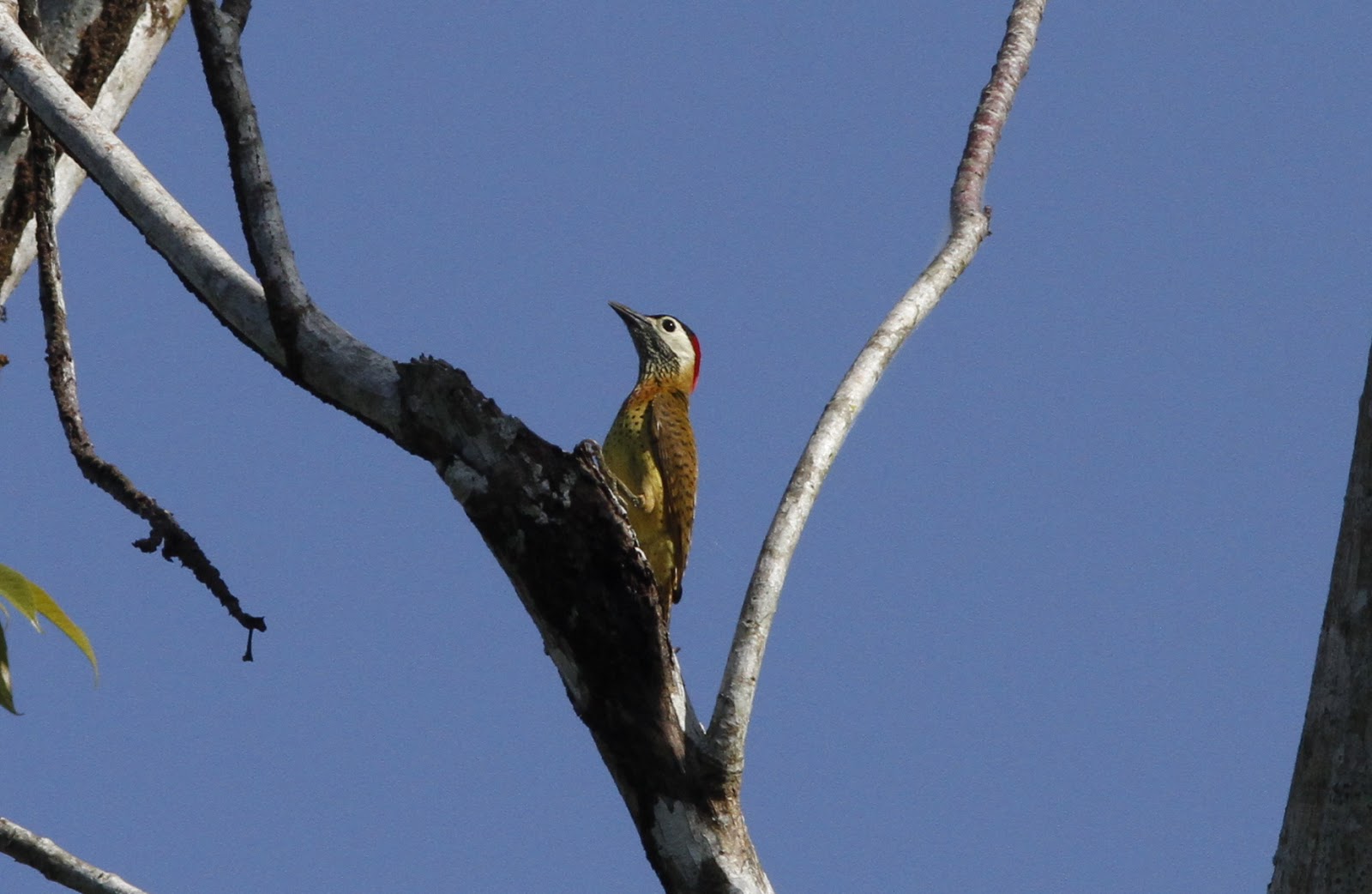
Golden-green Woodpecker
Howler Monkeys

Panama: The Darien Gap

I would love to say that going up Cerro Pirre in Darien National Park was more grueling than the last 4 months of work, but that would be a lie. To be honest, there is no sweeter high than feeling the embrace of a sweat-soaked t-shirt and clinging to an exposed tree root for dear life as you simultaneously wield a 300mm lens, bins and done a heavy backpack of camping supplies while spotting canopy birds and minding the ground for possible bushmasters. 
The quest began with a 32 hour journey involving a ferry, a sleep in the Vancouver airport, then 6am flight with 2 layovers. I needed all 7 hours of my layover to finish my online MYP course and used the other one to mark some mock papers...luckily I hadn’t made any promises to anyone!

Everything went smoothly, logistically, with the rental car and a nice calm road all the way to Yaviza where I met local guide Isaac Pizarro. He'd been messaging me on Whatsapp for weeks, trying to convince me to come to the Darien over Christmas break. Well, he succeeded! He was especially trying to sell me on the Dusky-backed Jacamar which incurred a substantial extra fee and in the end I settled on bringing him some Vasque hiking boots in exchange for a shot at the Jacamar. Our first day was mainly spent checking in at the border patrol station with the necessary permits Isaac had organized in advance, and getting supplies. We spent less than 40 bucks for 5 days of food for 3 hard working men, pretty good I thought.
We took a boat down the Tuira River to Vista Alegre, a pretty remote town set in the lowland rainforest. As you may know, there is no road to connect Panama with South America: they are separated by a vast wilderness known as the Darien gap. Given the geography they’ve had problems with narcotraficos, kidnappings, etc. so the border patrol keeps a close eye on things, hence the permits. In fact, we needed to stop and present our papers at several checkpoints along the river so they could check that they were expecting us.
Headed down the river Tuira in search of the Dusky-backed Jacamar
If you're gonna climb to Cerro Pirre, hire Allepio to cook your meals and carry the food
After working very long (and stressful) work weeks for 4 months straight followed by a night in an airport and an overnight flight (probably slept 5 hours in 2 nights) I was a 9/10 on the tiredness scale (not quite hallucinating yet). Expecting this third night to be finally a chance to sleep peacefully in my tent serenaded by grasshoppers and treefrogs, I was to have one of the most disturbed sleeps of my life. All around me were horny roosters and those dumb tropical beige dogs which kept barking at the slightest disturbance, all night long. Just as the rooster calls faded in the distance and you thought relief was on the way and it wasn’t so bad…a rooster would scream from 10m away and jolt you awake again. It was like some sleep torture method. Honestly I don’t know how these people tolerate such noise levels. I was asking Isaac about it and he just laughed.
Patacones - you get sick of them after so many days! 
One thing I was keen to hear was a tropical screech owl right next to my tent. It took maximum willpower to resurrect my broken body from the tent and put on one shoe, then the other one…
I thought I’d seen a flash of movement so I started scanning with my flashlight. My PrincetonTec headlamp, I’d learned upon arrival to this remote town, was broken (it wouldn’t turn on) which was basically a disaster because that would rule out owling for the next 7 nights of camping in epic habitat. Fortunately, there was a tiny tienda selling bits and bobs including a $4 flashlight that might be barely bright enough. I bought two just to be safe!! I figured we could combine the beams (I don’t know if physics works that way but worth a shot!).
The performance test of my new flashlight on the Tropical Screech was cut short by neighborhood dogs barking bloody murder for a solid 2 hours non-stop. I saw the silhouette of the spooked owl flee into the dense forest. I retreated back into my tent and bore the ever-increasing cock screams as the dawn approached for our Jacamar quest and I dragged my miserable carcass out of my tent.
When a man’s life force is all but depleted from sheer physical exhaustion, there are few forces of nature that can activate his emergency reserve that he never knew he had. Some of these forces are: imminent life-threatening danger, the prospect of imminent sexual reproduction, and a quest for a rare bird. 
Hiking and birding requires extra help - good thing we hired Allepio
Fortunately, once we got away from the villages, and strength gradually returned to my body with each peaceful night in the Darien, and each day of vigorous hiking and hard-core birding! Isaac has taken countless birders on the one trail up to Cerro Pirre, which is one of the only safe spots to visit in the Darien. Rancho Frio, Rancho Plastico and Cerro Pirre are the three main birding areas we visited. 
The scenic beauty of the Darien is shocking - few rainforests on earth are as unspoiled and wild as this. There were ancient trees that must have been growing since the times of the conquistadores. This jungle would be impenetrable were it not for Isaac and his trusty machete, as well as the one maintained trail. 
I recognized a few names in the guest book
There were so many highlights I had to make a list!!! So here they are in ascending order: 
12. Getting stung in the arse by a velvet ant! One of the most acute pains I've ever experienced. 
11. Central American Pygmy Owl
10. Choco Tapaculos 4 feet from our faces
9. Beautiful Red-and-green Macaws, Great Green Macaws
8. Black-tipped Cotinga (although very far away)


7. Spotting a Vermiculated Screech Owl at night (soon to be changed to 'Choco Screech Owl')
6. Ocellated Antbird and Wing-banded Antbird
6. Finding the night-roost of Tawny-faced Woodquail AND Marbled Wood-quail!
5. Sapayoa 
4. Dusky-backed Jacamar (after a proper search!)
3. Harpy Eagle sitting on the nest (we missed the male deliver a monkey while being distracted by a Black-crowned Antpitta
2. Scintillating views of Streamcreeper, after our 4th attempt!
1. The bushmaster one foot off the trail (found by Isaac's son)
Bushmaster - one bite from this snake and it would be game over
Look at how close the bushmaster is to the trail! 
Organizing a trip into the Darien is a logistical feat - you definitely couldn't do it without Isaac making the arrangements


The Darien Gap was a breathtaking 8 days of hardcore birding in one of the world's most wild and unspoiled tracts of rainforest. The bird and wildlife sightings were enough to fill a memory card and provide many sweet memories. It was two months later in Victoria that I would find out that these memories came at a cost - when I received a disturbing diagnosis by an infectious disease specialist...I had leishmaniasis which would require 6 days of IV treatment in the hospital and several weeks of chronic fatigue and a plethora of other symptoms. As I am updating this post, I am gradually feeling better and starting to train again - Kilimanjaro is in 2 months. 

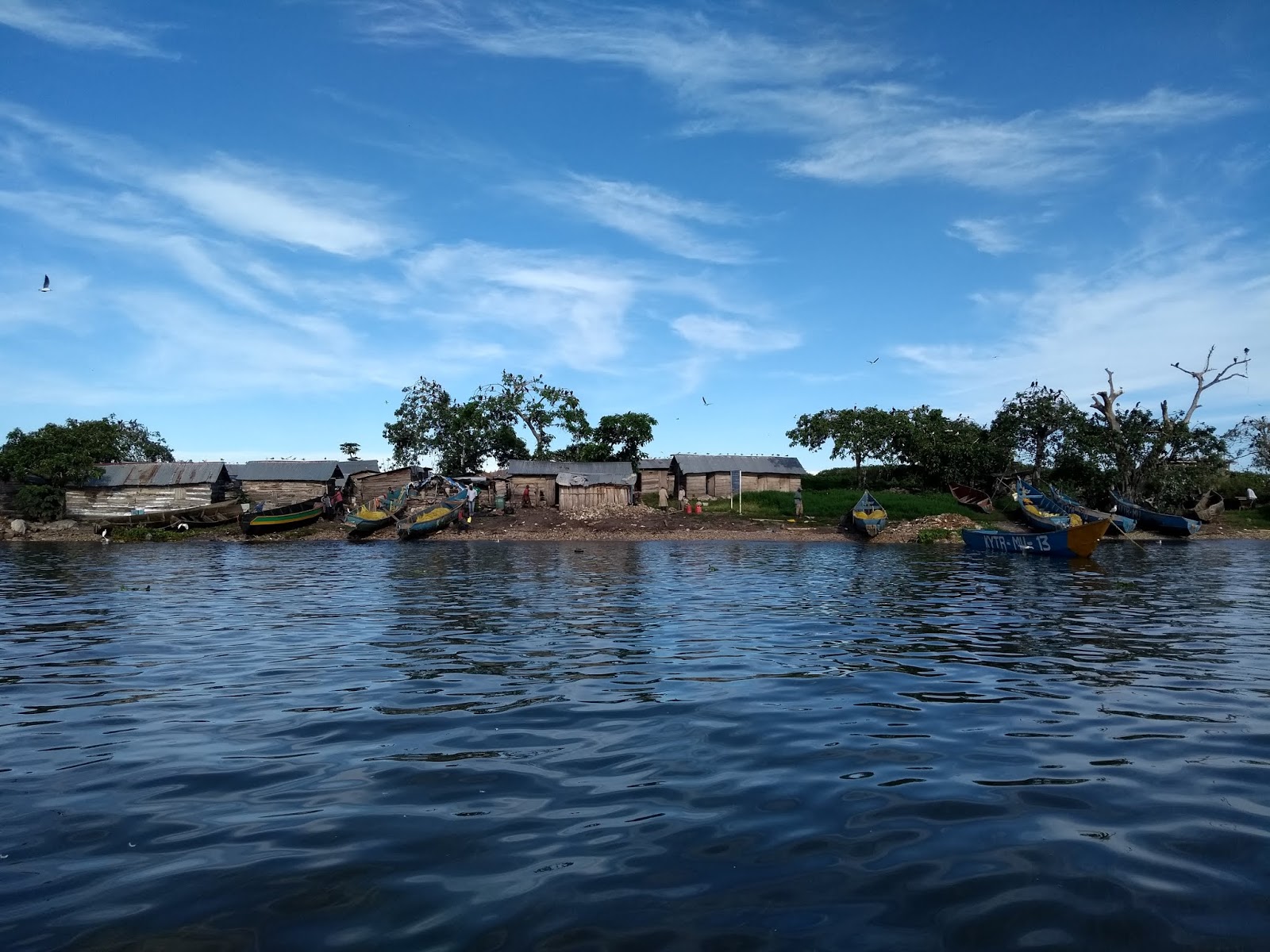
Musambwa Island


Once upon a time when I was skipping through an old East Africa lonely planet guide at my friend Rilke's house, I happened upon a short paragraph about an island in Lake Victoria on which snakes - mostly forest cobras - dwell in harmony with local fishermen. The islanders live a basic life of fishing, sharing their tiny island with a colony of waterbirds and a dense concentration of these cobras, but banning women from setting foot on the island. The name of this place: Musambwa Island. It means 'spirit island'. 

Getting there was tricky. We took a night bus from Kigali to Kampala, but told the driver to let us off at Masaka. At about one in the morning, I woke up accidentally and checked my GPS. We had just overshot Masaka by about 1km. I told the driver to stop and let us off, which led the passengers to believe we had reached Kampala. They were not pleased! 

There we were at a petrol station in the middle of the night, accompanied by a female security guard who helped us hail a passing motorbike. Hoping to not get robbed, we put our faith in him to take us to a hotel. 

In the morning, we found a taxi to take us to Kasensero Landing Site, which seemed to be the most logical way to get to Musambwa island according to my map, although getting information/directions from Ugandans or Rwandans is extremely difficult because you never get a straightforward answer. 

Jack and I were on our toes non-stop during this adventure. After a few minutes, my GPS showed our trajectory to be about 90 degrees off from our intended direction. We duly informed the driver, but he pretended not to understand us, saying he knew where we were going (funny, he spoke perfect english a few minutes ago!). We were pretty sure we were being robbed, so we devised a plan to ask for a bathroom break in the next town, where I would need to get toiled paper from my backpack then we'd make a run for it. As we were about to do this, we realized what was really going on - he was using our fare to pick up his friend and his son! We thought about charging them money, but in the end decided lets just get there and lose this guy. 

Once in Kasensero, things got a whole other level of strange. We walked to the docks to try and hitch a ride on a fishing boat to get to Musambwa Island, but a police chief and a border officer were asking us all sorts of questions and being very suspicious of our plans. We did not say we were after snakes, just 'wildlife photography.' They convinced us not to sleep on the island as it was not 'safe'. They also suggested that the fishermen would attempt to swindle us by charging a fair price to get there, but then threaten to strand us there unless we paid them a huge fee. Their suggestion: we hire the police to take us in their 'safer and faster' boat, which we bargained from 70 down to about 50 bucks. After much discussion, we decided in favour of certainty, so we would have to wait until morning to go. Meanwhile, we explored the town, encountering some interesting characters. First was the town mayor come to greet us, who told us some history of this story of this town over a rolex. 

I've been all over Uganda, and this was the best Rolex I've had
During the AIDS epidemic in the 1980's, Kasensero was one of the first towns in Uganda to be hit. This was because long-haul truckers brough cargo here to be shipped across Lake Victoria. At night, they blew off steam with local prostitutes. Now it made sense why women were banned from Musambwa island. Today, the people are quite educated on AIDS and prostitution has become rare, he said, although women are still banned from the islands. 

Then we met the town 'smuggler' who claimed to be able to smuggle anything for us. We told him his services would not be needed as we were 'biologists' interested in photographing cobras. He was actually a very friendly guy and wished us good luck. 

During this entire time, we'd been followed by 2 men in a white car. When we looked over at them, they stopped watching us and drove off, but kept coming back. This was really freaking us out so we decided to see our new friend Henry (the police chief) at his office. After some anticipation waiting for him and another sighting of the 2 men, he arrived to greet us. We did not need to worry, he assured us, as the 2 men were his employees! We could sleep in peace. 


In the morning, we found the police and after lots of waiting around and confusion (which seemed to be a typical theme in Rwanda and Uganda) we were finally speeding over to Musambwa island to look for cobras! 
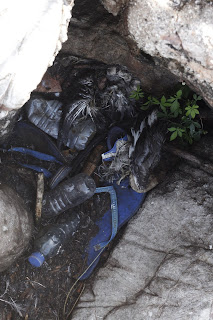

One of the 'snake dens'


Two local guides had come with us and they requested a fairly substantial 'conservation fee' but they were extremely determined to help us find cobras! Henry and a couple of the police guys were also really interested in helping us and we scoured the entire island including the insides and outsides of shanties, the waterbird colony, some small caves inhabited by 'spirits' and even around the much neglected bathrooms. They told us many stories and we were having a great time but eventually we had to call it a day. 


We never found a single cobra. Since it was egg-laying season for the gray-headed gulls and the cormorants, the cobras had plenty of food and were probably all underground digesting, with no need to be out and about. We went back to town where they requested a 'docking fee' to compensate the local boys to pull the police boat up on shore. It was well worth the modest fee for the entertainment as they sang a silly call-and-respond song to haul the boat up the shore. 


We were glad we decided to visit this obscure corner of Uganda. It was a reminder of what 'real traveling' is like, which one tends to forget in today's day and age. Plus, we met some real interesting characters that's for sure! 

Our new friends
We by-passed some incredible lowland forest along the Masaka-Kyeebe road which I would be really keen to explore in the future. Too bad we didn't have time - Jack needed to be back for work. 


It was getting dark so we caught the last 'car' back to Kampala, crammed full with both of us and a  family. The driver seemed to be in a hurry, going about 60 km/h on the worst pothole-ridden road you can imagine, causing us worry he was going to bottom out (which he did many times). He clipped a child riding a bike with his side mirror, not stopping to inspect the damage. Then it got quite dark and the car slowed to a stop. We though it was mechanical problems. We couldn't understand what was going on because neither Jack nor I know any Luganda. So we were standing out there, dousing ourselves with bug spray as we were in moist lowland forest/farmland, basically a hotspot for malaria (in fact, Jackson was later diagnosed with it after the trip - don't worry he is fine now!). It turned out the idiot had just run out of fuel, so we had to wait for a motorcyclist to pass by so we could ask him to drive to the next town and return with fuel for us. His driving was so insane, it was THE SINGLE moment of my life when I was closest to death I think. Will we ever be back to this strange corner of Africa? 

Maybe. 

Journey to the Lewa Safari Marathon

By September 2024, I had just completed 20,000 push-ups in a year and  banked four full hours of Wim Hof breathing , and about 8 hours' ...